
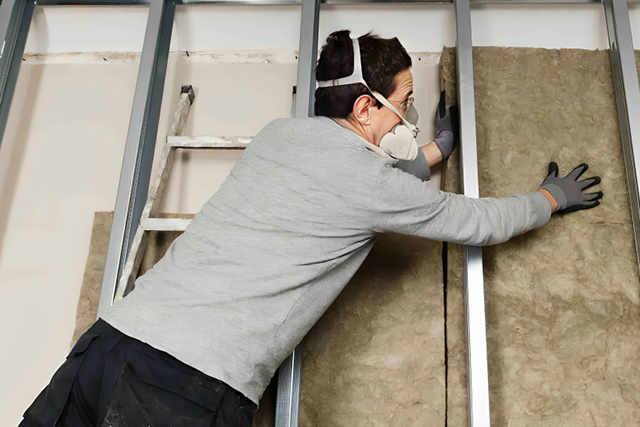
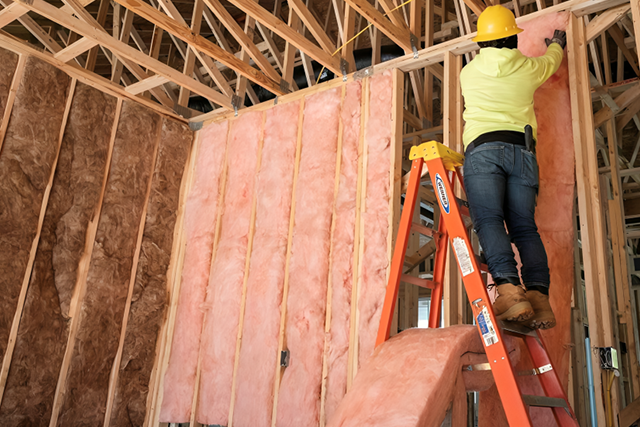
Poorly insulated finished walls can allow indoor heat to move outside during winter and enter the home during warmer months. We address these wall cavities without requiring full wall removal. This work is useful when certain rooms feel harder to heat or cool than others. Eagle Mountain Insulation checks the wall layout and identifies areas where insulation may be missing, thin, or uneven.
Our approach focuses on adding insulation inside closed wall cavities while limiting changes to existing wall finishes. Proper coverage can help exterior-facing rooms hold a steadier indoor temperature. Existing wall insulation may also reduce cold wall surfaces and lessen temperature changes near exterior walls.
Here are some practical benefits homeowners may notice after wall cavities receive proper insulation:
Insulation slows heat movement through finished exterior walls, helping indoor spaces stay more stable when outdoor temperatures rise or fall.
Insulated wall cavities help rooms hold heated or cooled air longer instead of losing temperature quickly through exterior-facing walls.
Better wall coverage can reduce cold interior wall surfaces during winter, especially in bedrooms, living rooms, and other exterior-facing spaces.
Insulation helps limit outdoor heat entering through sun-exposed walls, which can make certain rooms easier to keep comfortable during warmer weather.
We provide wall insulation services based on the condition and construction of each finished wall. The goal is to improve wall coverage while keeping the existing structure largely intact.
Different finished walls require different insulation materials because cavity depth, framing, access, and existing insulation can vary from one property to another. Eagle Mountain Insulation reviews these conditions before selecting a material for existing wall insulation services. This helps us avoid using one material for every wall without considering how the cavity is built.
Blown-in fiberglass can work in enclosed cavities where loose insulation can move through available wall space. It can fill areas around framing when proper access points are available. Blown-in wall insulation is often considered when homeowners want to improve insulation without removing large sections of drywall.
Dense-packed cellulose can also be placed inside finished wall cavities. The material fills enclosed spaces at a controlled density and can reach gaps that older insulation may no longer cover. It is useful when cavities have empty or lightly insulated sections.
Injection foam may suit certain wall structures where the material can enter through small openings and expand inside the cavity. However, you must check wall condition, cavity design, wiring, plumbing, and existing materials first.
Our finished wall insulation process considers wall depth, framing layout, current insulation, and access before material selection. This allows each wall section to receive an option that fits its actual construction rather than relying on assumptions.
Every finished wall has its own construction details, so the same installation method does not fit every property. Before starting existing wall insulation, Eagle Mountain Insulation checks the wall structure, available access, and any materials already inside the cavity. These details affect how insulation enters the wall and how evenly each section can be filled.
Our team also reviews wall height, cavity depth, exterior finishes, and interior surfaces. Existing wall insulation requires careful planning around wiring, plumbing, fire blocks, and framing that may divide one cavity into several sections.
The following factors help us decide how the work should be completed:
Deeper or narrow cavities affect how insulation moves inside the wall and may change the material, access method, and filling process used.
Old insulation may remain usable, settle toward the bottom, or leave empty sections that require a different filling method for better wall coverage.
Electrical wiring, plumbing lines, outlet boxes, and framing blocks can limit movement inside cavities and require separate access points for certain wall sections.
Drywall, plaster, siding, and other finishes affect where access openings can be placed and how the wall is closed after insulation is added.
We use these conditions to plan wall cavity insulation for each section rather than treating every exterior wall the same. This supports more consistent coverage and reduces unnecessary changes to finished surfaces.
We address wall cavities where older insulation has dropped, leaving upper sections exposed. Our team carefully fills these weak areas, so clients get more insulation coverage throughout the finished wall.
We work with older finished walls that may have irregular stud spacing or divided cavities. Our approach helps clients avoid missed sections that often occur when wall construction does not follow modern layouts.
We check filled wall sections before finishing the job, so clients are not left with unnoticed empty areas. Our team focuses on consistent cavity coverage from one section of the wall to another.
A colder wall may contain an uninsulated section, compressed material, or a cavity that previous insulation never reached. Eagle Mountain Insulation can check the affected wall area and determine whether added cavity insulation is appropriate.
Settled insulation can leave the upper part of a finished wall with little thermal protection. Our team checks where material has dropped and determines whether the open section can receive additional insulation without removing large areas of wall finish.
Older plaster walls can sometimes receive existing wall insulation services, but their framing and internal barriers require careful review first. Eagle Mountain Insulation checks cavity access and wall condition before deciding how insulation can be added safely.
Fire blocks, cross framing, narrow spaces, and older construction details can divide a wall into smaller sections. We account for these internal barriers so each reachable cavity receives attention instead of assuming insulation moves freely through the entire wall.
Sun exposure, wind direction, past remodeling, and different construction periods can cause one side to perform differently. Our team can focus on the affected finished walls rather than assuming every exterior wall requires the same amount of added insulation.
Finished walls beside an attached garage may experience larger temperature changes when cavity insulation is limited. Eagle Mountain Insulation reviews these shared wall sections and determines whether added insulation can reduce temperature movement through the finished wall.