
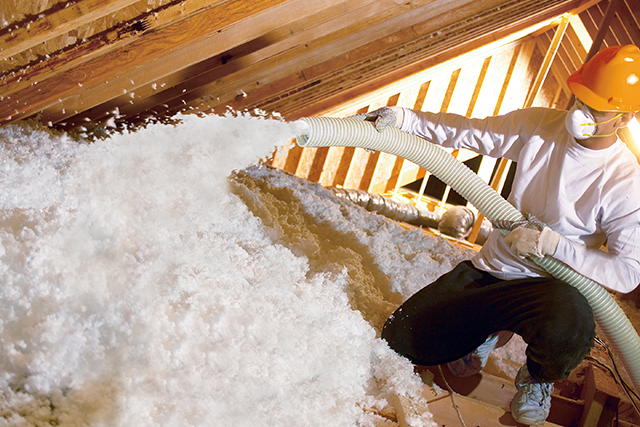
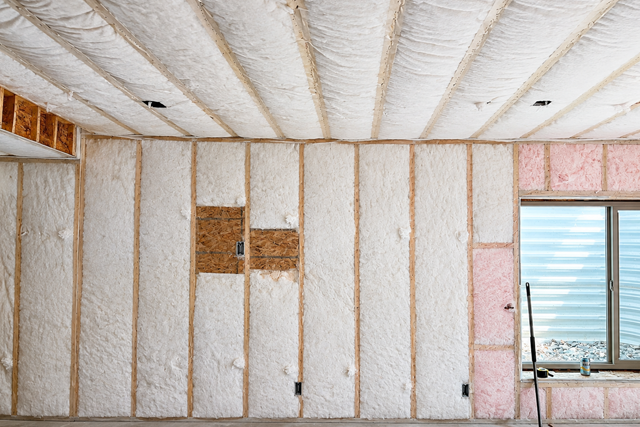
Proper cavity coverage helps framed walls control heat movement and maintain more stable indoor temperatures. A blown-in blanket system places loose fiberglass behind secured netting, allowing insulation to fill spaces around framing, wiring, and other obstacles. We work especially well where standard insulation pieces may leave small, uncovered areas.
At Eagle Mountain Insulation, our approach focuses on placing material evenly throughout accessible framing while considering cavity depth and the layout of each wall. Wall cavity insulation also requires attention to the areas where the building structure changes shape or contains mechanical components.
Here are several areas where this insulation method may be installed:
Open exterior framing gives installers direct access to fill stud spaces and work around wiring, electrical boxes, and structural components.
Newly framed interior walls may receive insulation when the project requires added thermal control or reduced sound movement between rooms.
Framed basement walls and garage-to-living-space walls may contain uneven areas that require controlled insulation placement throughout each cavity.
Accessible cathedral ceiling cavities can receive insulation where the assembly design, required depth, ventilation needs, and building requirements allow this method.
Our fiberglass blanket insulation process considers each accessible cavity separately. Eagle Mountain Insulation checks framing conditions before placement, so the material fits the actual wall or ceiling assembly.
Wall cavities often contain wires, pipes, electrical boxes, braces, and framing changes that make insulation placement more difficult. Small, uncovered spaces can remain when insulation does not fit closely around these components. We address these conditions by placing loose fiberglass through netted wall cavities instead of relying on pre-cut insulation pieces.
Empty pockets inside framing can create inconsistent insulation coverage. Our team places material across the full accessible cavity and works around objects that interrupt the wall space. This process helps reduce areas where insulation thickness changes without reason. Dense-pack fiberglass insulation also allows material to reach corners and narrow sections that can be difficult to fill with standard batts.
Plumbing lines create another common challenge. Insulation needs to surround these areas without leaving large gaps or interfering with the building components. Wiring and electrical boxes require the same attention. We control material placement, so these sections remain properly covered while accessible components stay correctly positioned.
Our process also considers cavity shape, framing depth, and material distribution. Eagle Mountain Insulation focuses on consistent placement rather than simply filling visible open spaces. This approach helps create more complete coverage across framed wall sections before drywall closes the cavities.
Installation does not end when fiberglass enters the wall cavity. The filled area must be checked before drywall covers the framing. During blown-in blanket system installation, Eagle Mountain Insulation reviews visible sections for inconsistent depth, uncovered corners, and areas where material may not be distributed correctly. Our checks focus on conditions that can affect insulation coverage after the wall is closed.
These quality checks help us review important parts of each completed cavity:
We inspect visible cavity surfaces for sections with less material than surrounding areas and correct coverage before the wall receives drywall.
We examine cavity corners and framing intersections where loose fiberglass may require additional placement to maintain consistent insulation depth throughout the section.
We check insulation around electrical boxes and nearby wiring so fiberglass fills surrounding cavity space without leaving unnecessary open areas behind.
We review cavity depth and fiberglass distribution to confirm material reaches the intended sections instead of collecting unevenly in isolated areas.
These insulation quality checks help identify installation issues while framing remains accessible. With fiberglass wall insulation, correcting a thin or missed section before drywall installation is easier than addressing it after the wall is finished. Our process keeps the final inspection focused on actual cavity coverage.
We control loose fiberglass around the work area and protect nearby finished surfaces, helping you avoid extra cleanup when blown material is installed beside completed floors, fixtures, or interior finishes.
We confirm the blowing fiberglass matches the planned wall assembly before installation, helping you avoid using material that doesn’t meet the project’s stated insulation requirements or the manufacturer’s application instructions.
We explain access needs before arrival, helping you keep open framing reachable and avoid delays caused by stored materials, blocked wall sections, or other items sitting directly against the work area.
Blown fiberglass can reduce some sound movement through insulated wall cavities, which may help when bedrooms, offices, or living areas share walls. It does not make a room soundproof. Our team can explain what level of sound control the wall assembly may provide.
Yes, when the wall assembly and local code call for one. The vapor retarder is not automatically the same for every climate or building. We review the planned assembly so the fiberglass works correctly with the required moisture-control layer.
R-value depends on the fiberglass product, cavity depth, and installed density. A shallow wall and a deeper wall do not receive the same rating. Eagle Mountain Insulation follows product requirements rather than promising one R-value for every project.
Future wiring changes may require an electrician to open the finished wall and work through the filled cavity. The insulation does not prevent later electrical work, but some fiberglass may need to be moved and replaced around the opened section afterward.
Clearance depends on the fixture rating and building requirements. Insulation should not cover equipment that requires open space around it. Our crew identifies restricted areas before placement and keeps blown fiberglass away from components that cannot be safely covered.
Yes. With blown-in blanket system services, the retaining fabric normally remains over the filled framing after installation and sits behind the finished wall. It continues to hold the fiberglass within the cavity once the wall covering is installed.